
Smt pcba
The arrangement of components on a Surface Mount Technology (SMT) printed circuit board assembly (PCBA) is a meticulous process crucial to the functionality, performance, and reliability of electronic devices. Unlike traditional through-hole assembly methods, where components are inserted into pre-drilled holes and soldered from the opposite side of the board, SMT involves mounting components directly onto the surface of the PCB. This method offers numerous advantages, including higher component density, improved electrical performance, and enhanced manufacturing efficiency.
The layout of components on an SMT PCBA is carefully planned to optimize space utilization, minimize signal interference, and facilitate automated assembly processes. Engineers and designers employ Computer-Aided Design (CAD) software to create precise layouts, considering factors such as component size, orientation, thermal management, and signal routing. Components are typically grouped according to their function, with critical components placed strategically to ensure efficient signal flow and thermal dissipation.
One of the key aspects of arranging components on an smt pcba is component placement optimization. This involves determining the optimal location for each component to maximize space efficiency while minimizing signal distortion and thermal issues. High-speed digital signals, for example, require careful attention to signal integrity, with components placed in proximity to minimize signal path lengths and reduce transmission line effects.
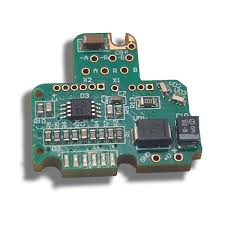
How are components arranged on an Smt pcba?
Furthermore, thermal management is a critical consideration in component arrangement on an SMT PCBA. Components that generate heat, such as microprocessors and power amplifiers, are strategically positioned to facilitate heat dissipation and prevent overheating. Heat-sensitive components, on the other hand, are placed away from high-temperature sources to avoid performance degradation or premature failure.
In addition to optimizing component placement, engineers also consider the orientation and alignment of components on an SMT PCBA. Components are typically mounted parallel to the PCB surface, with standardized orientation to ensure consistency and ease of assembly. This uniformity facilitates automated pick-and-place processes, where robotic equipment precisely positions components onto the PCB with speed and accuracy.
Another aspect of component arrangement on an SMT PCBA is the selection of component packages and footprints. Different components come in various package sizes and configurations, each offering specific advantages in terms of size, performance, and thermal characteristics. Engineers must carefully select the most appropriate component packages and footprints to meet design requirements and manufacturing constraints.
Moreover, the arrangement of components on an SMT PCBA is influenced by manufacturability considerations. Design for Manufacturing (DFM) principles are employed to ensure that the PCBA can be efficiently and cost-effectively produced in large quantities. Components are arranged to minimize assembly complexity, reduce material waste, and optimize production throughput.
As electronic devices become increasingly compact and complex, the importance of efficient component arrangement on SMT PCBAs continues to grow. Advanced manufacturing techniques, such as multi-layer PCBs, stacked components, and 3D integration, enable even greater component density and functionality within limited space constraints. These advancements drive innovation in electronics design and manufacturing, enabling the development of smaller, more powerful, and more feature-rich devices.
In conclusion, the arrangement of components on an SMT PCBA is a highly intricate and purposeful process, essential to the performance, reliability, and manufacturability of electronic devices. By optimizing component placement, managing thermal considerations, and adhering to DFM principles, engineers and designers can create PCBAs that meet the demanding requirements of modern electronics while enabling efficient and cost-effective manufacturing.