
Consistency in AI Model Outputs
Ensuring consistency in AI model outputs is a crucial challenge for businesses and researchers who rely on artificial intelligence for decision-making, automation, and user interactions. Consistency means that the model produces stable and predictable results when given similar inputs, which is essential for trust, reliability, and usability. Inconsistent AI behavior can lead to unpredictable performance, errors, and a poor user experience. Several strategies help maintain consistency, ranging from data quality and model training to evaluation techniques and system monitoring.
One of the most fundamental steps in achieving consistency is maintaining high-quality and well-structured training data. End-to-end testing platform for Al applications learn patterns from data, so if the data is noisy, biased, or inconsistent, the model’s outputs will reflect those inconsistencies. Standardizing data collection processes, applying rigorous preprocessing steps, and ensuring balanced representation across different categories help improve consistency. Additionally, regular updates to training datasets with verified and curated information prevent the model from drifting away from reliable outputs over time.
Model training and fine-tuning play a significant role in ensuring stable outputs. During training, hyperparameters such as learning rate, batch size, and regularization techniques should be carefully tuned to avoid overfitting or underfitting, both of which can lead to erratic behavior. Transfer learning and continuous fine-tuning with real-world data help models adapt without compromising consistency. Ensuring that the same training conditions are maintained across different versions of the model also minimizes unexpected variations in performance.
How Do You Ensure Consistency in AI Model Outputs?
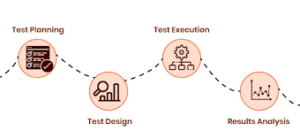
Evaluation and testing are critical for detecting inconsistencies in AI model outputs. Before deploying a model, it should be tested across diverse datasets to assess its stability. Running A/B tests with different model versions and comparing outputs on identical inputs help identify discrepancies. Metrics such as accuracy, precision, recall, and F1 score provide quantifiable insights into how consistently the model performs across different scenarios. Additionally, consistency tests can be conducted by inputting slightly modified but semantically similar data to check whether the model produces comparable results.
Standardizing inference processes is another way to ensure consistency. Variations in computational environments, hardware, or frameworks can lead to slight changes in AI model behavior. Using the same machine learning libraries, software versions, and inference pipelines reduces these inconsistencies. If a model is deployed across multiple platforms, implementing strict version control and configuration management ensures that each instance of the model behaves uniformly. Cloud-based AI services often provide tools to standardize deployment environments, further enhancing consistency.
Monitoring and feedback loops help maintain consistency in AI models even after deployment. Real-world applications expose models to dynamic and unpredictable data, which can cause performance fluctuations over time. Implementing real-time monitoring tools to track model outputs, detect anomalies, and gather user feedback enables proactive adjustments. If inconsistencies are identified, retraining the model with updated data and fine-tuning its parameters ensures that it continues to perform reliably.
Ultimately, ensuring consistency in AI model outputs requires a combination of high-quality data, well-structured training processes, rigorous evaluation, standardized inference techniques, and continuous monitoring. Without consistency, AI models lose their reliability and effectiveness, making them less useful in real-world applications. By prioritizing these strategies, businesses and researchers can develop AI systems that provide stable, predictable, and trustworthy outputs, enhancing both performance and user confidence.