
Managed Security Service Handle Data Breach Attacks
With data breaches affecting more and more businesses, it’s no wonder that many organizations are searching for ways to keep their information systems secure. A managed security service provider, or MSS, is an outsourced solution that enables companies to maintain their strong security posture without having to hire full-time staff. The MSS model also allows companies to leverage state-of-the-art technologies without a large upfront investment.
An important consideration when choosing an MSS is how the service provider handles cyberattacks. The best ones have 24/7 monitoring capabilities to detect and stop opportunistic threats before they can do any damage, and they work with customers to set up the appropriate alerts so that they can be quickly notified of potential attacks. They will be able to provide guidance on relevant regulations, as well as support reporting requirements and submit additional documentation in the event of an incident or breach.
Ideally, an MSS will have a clear and easy-to-understand process for communicating about threats with customers. It should also be able to share its threat intelligence, which will enable you to better understand the threats you face and what is being done by attackers to target your organization.
In addition to 24/7 network monitoring, an MSS should be able to offer vulnerability management, which involves performing frequent scans of the organization’s system and applications for weaknesses that attackers could exploit. The MSSP should then identify those vulnerabilities, help prioritize them, and recommend mitigation strategies. It should also assist with patch management to reduce the likelihood of exploitation.
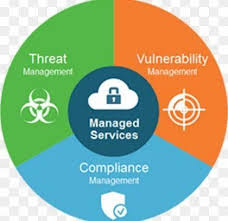
How Does a Managed Security Service Handle Data Breach Attacks?
Some MSSPs also offer advanced detection and response services, including forensic analysis and investigation of suspicious activity. They may also provide breach remediation services, helping organizations to clean up and restore their data after a cyberattack.
While technology plays a key role in preventing data breaches, it’s equally important to have a strong culture of cybersecurity awareness throughout the organization. MSSPs often provide training for employees to help them recognize potential cyber threats. This type of training is akin to teaching employees how to spot shoplifters, allowing them to recognize and stop suspicious activities before they can cause any harm.
Lastly, an managed security service provider will manage and monitor security devices such as firewalls, intrusion detection/prevention systems (IDS/IPS), and Security Information and Event Management (SIEM) platforms to ensure that they are correctly configured, updated, and optimized to detect and respond to threats. They can also provide malware protection and endpoint detection and response (EDR) services to prevent cyberattacks from reaching the network’s inner most layers and exposing sensitive data.
When evaluating an MSSP, look for one that has experience working with businesses of similar size and scope to your own. They should have a good understanding of your industry and its unique security challenges, and they should be able to explain their technologies in a way that makes sense to you. You should also look for an MSSP that provides a list of their current clients, so you can see how they have helped other businesses like yours to maintain their strong security posture.